
!
Salt film returning within days
Waterfront proximity means a haze builds on glass and entries far faster than inland premises deal with.
Serving Myrtle Beach, South Carolina & surrounding areas
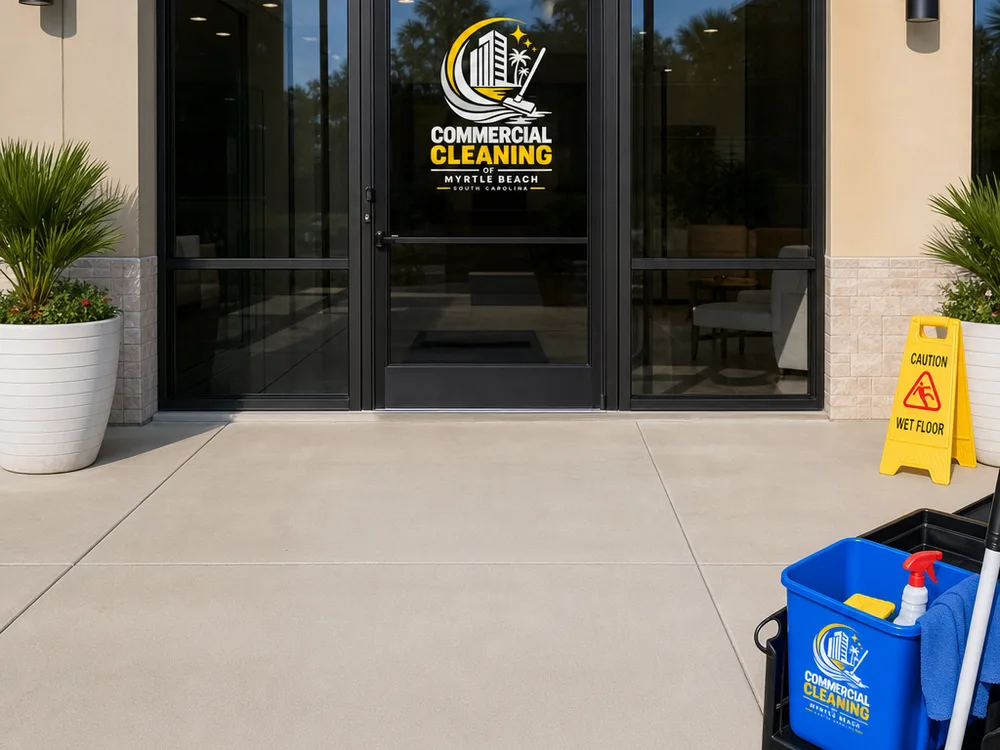
Little River businesses sit close enough to the water that glass and entries need a shorter interval than anywhere inland.
Free assessment · Frequency built for the location · No obligation
Waterfront proximity means a haze builds on glass and entries far faster than inland premises deal with.
Boat traffic and waterfront footfall track salt, sand and damp straight through the door all season.
Being close to the water keeps damp levels high, which drives mildew in any corner that never fully dries.
Little River's season is shaped by boating and fishing as much as by the beach, so a standard coastal scope misses it.
Salt air attacks door hardware, railings and fittings, and leaving deposits on them accelerates it.
Little River sits on the water, and almost every cleaning problem here traces back to that: salt, damp and what gets walked in from the waterfront.
A recurring scope built around shorter waterfront intervals.
Read more
Cleans timed around the boating and fishing season rather than the beach one.
Read more
Floors taking damp and salt from constant waterfront foot traffic.
Read more
Clearing mildew from the corners humidity keeps permanently damp.
Read more
The shortest glass interval we run, because salt film returns fastest here.
Read more
Decking, walkways and exteriors exposed directly to salt air.
Read more
Marina offices and waterfront professional space.
Read more
Waterfront fit-outs finished to a handover standard.
Read more
Glass and entries get a shorter frequency here because the deposits genuinely return faster.
Salt left on glass and hardware long enough causes permanent damage that no cleaning reverses.
Mildew is a moisture problem, so drains, grout and the areas that stay wet go into the scope.
Frequency steps up for the boating and fishing season rather than a generic summer window.
Businesses with sites in both areas keep one scope and one contact across them.
Little River is covered by the same crews that serve North Myrtle Beach, so a business with sites in both keeps one scope and one point of contact.
We look at how close your building sits to the water, since that sets the interval more than size does.
Glass and entries get a shorter frequency here, written in rather than added after complaints.
The same crew serves Little River and North Myrtle Beach, so multi-site businesses get consistency.
Checks look for salt deposits and damp corners, which are the two local failure modes.
Frequency rises for your boating and fishing season rather than a generic summer window.
Waterfront conditions are the whole story here, and these commitments are about building the schedule around them honestly.
Glass and entries get the frequency the location actually needs, stated honestly.
Salt left long enough damages glass and hardware permanently, so timing is the whole point.
Businesses with sites here and in North Myrtle Beach keep a single agreement and contact.
Waterfront results are visible within weeks, so the schedule stands on what you can see.
Little River pricing reflects the shorter intervals waterfront glass and entries genuinely need, which is the honest cost of the location.
Glass area is unusually important here, since it needs the shortest interval on the building.
Waterfront premises need shorter intervals than inland, which is the honest cost of the location.
Marina and waterfront footfall brings in more than ordinary retail traffic does.
Salt deposit removal and damp treatment are scoped as their own tasks.
Transparent pricing · No hidden fees · No long-term contract required
More often than inland. Most Little River premises need entry glass every other week through season, where a building a few miles inland would hold at monthly.
Caught early, yes, and that is the point of a schedule. Left for years, salt etches glass and corrodes fittings in ways cleaning cannot reverse.
Yes, including offices, retail and common areas at waterfront sites. The scope accounts for what gets walked in from the docks.
It usually comes from drains, grout or a corner that never dries rather than the surfaces being cleaned. Treating the source is what actually removes it.
We serve Little River and the immediate area including Calabash. Anything further into North Carolina we will tell you honestly at the quote stage.
Tell us how close to the water you are and how the glass looks by the end of a week. That sets the interval more than anything else.
Prefer to talk? Call (854) 504-2770 or email [email protected].
No obligation, and we will not add you to a mailing list.
Free assessment · Response within one business day · No obligation